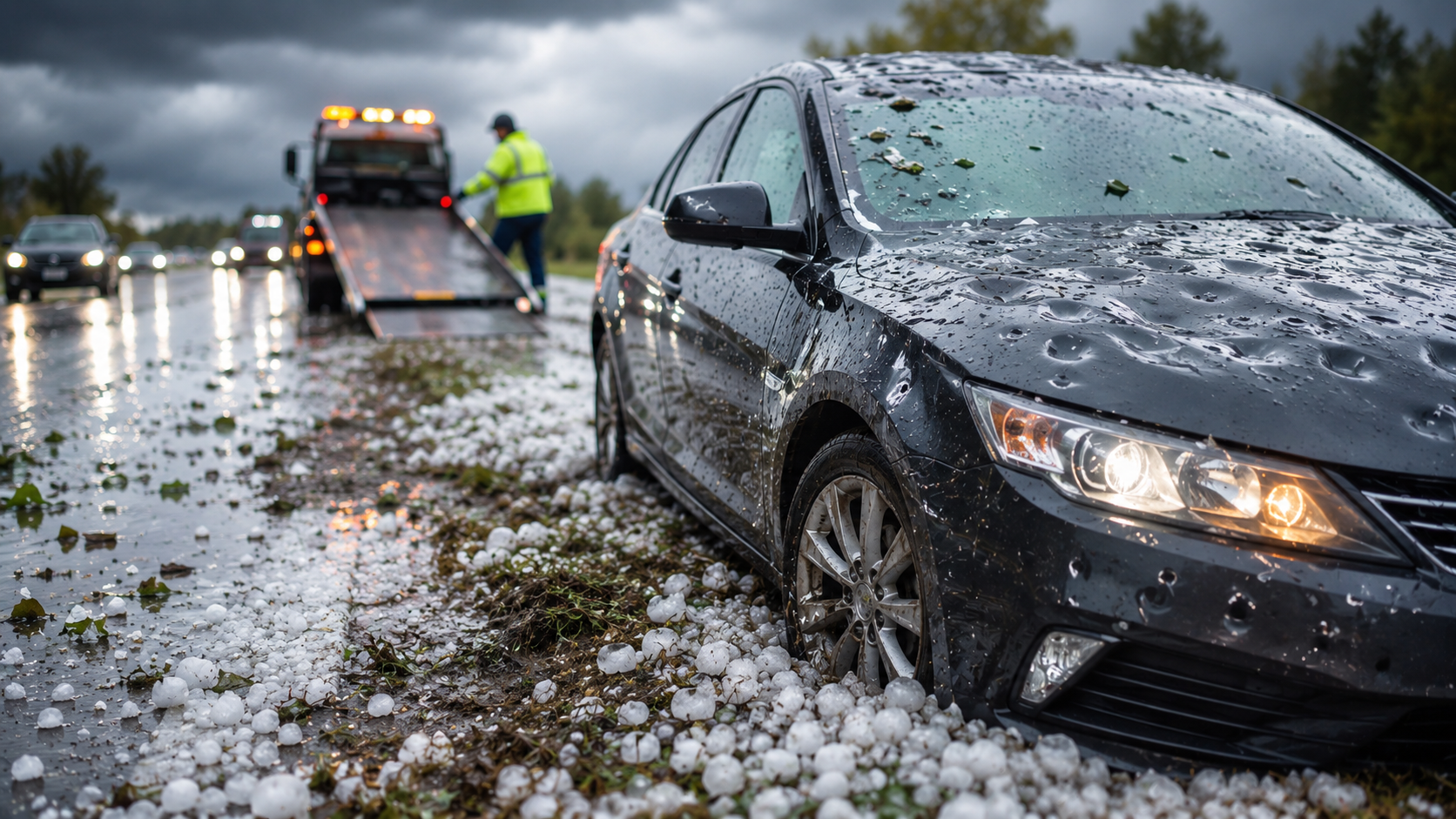
If your car won’t start, has a shattered windshield, or is stuck in flooded or hail-covered roads after an Alberta storm, move to safety first, then call a local towing company for a flatbed tow don’t attempt to drive a vehicle with storm damage, as this can worsen mechanical or structural issues.
Calgary sits inside what meteorologists call “Hail Alley” the stretch of southern Alberta that sees more severe hailstorms than almost anywhere else in Canada. Every summer, from late June through September, sudden hailstorms roll through neighbourhoods like Airdrie, Chestermere, and southeast Calgary, leaving dented hoods, shattered windshields, and drivers stranded on the side of the road. If you’ve just been caught in one, here’s exactly what to do.
Why Hailstorms Strand Vehicles in Calgary
Hail doesn’t just dent metal. It can:
- Crack or shatter windshields and rear windows, making a vehicle unsafe to drive
- Damage sensors, cameras, and antennas on newer vehicles (especially EVs and luxury cars)
- Cause drivers to pull over suddenly on highways like Deerfoot Trail or Stoney Trail, sometimes in low-visibility conditions
- Lead to flash flooding on underpasses, stalling engines that take on water
Any one of these situations can leave you stuck and in a bad storm, waiting it out on the shoulder isn’t always safe either.
Step-by-Step: What to Do If You’re Caught in a Hailstorm
1. Get to Shelter, Not Just Off the Road
If you’re driving when hail starts, look for an overpass, parkade, or gas station canopy. Don’t stop under trees or power lines.
2. Assess the Damage Before Driving Again
Even if the storm passes, don’t assume your car is safe to drive. Check for:
- Cracked windshield glass (a shattered windshield can fail completely under vibration)
- Warning lights on the dashboard
- Unusual sounds from the engine bay if water got in
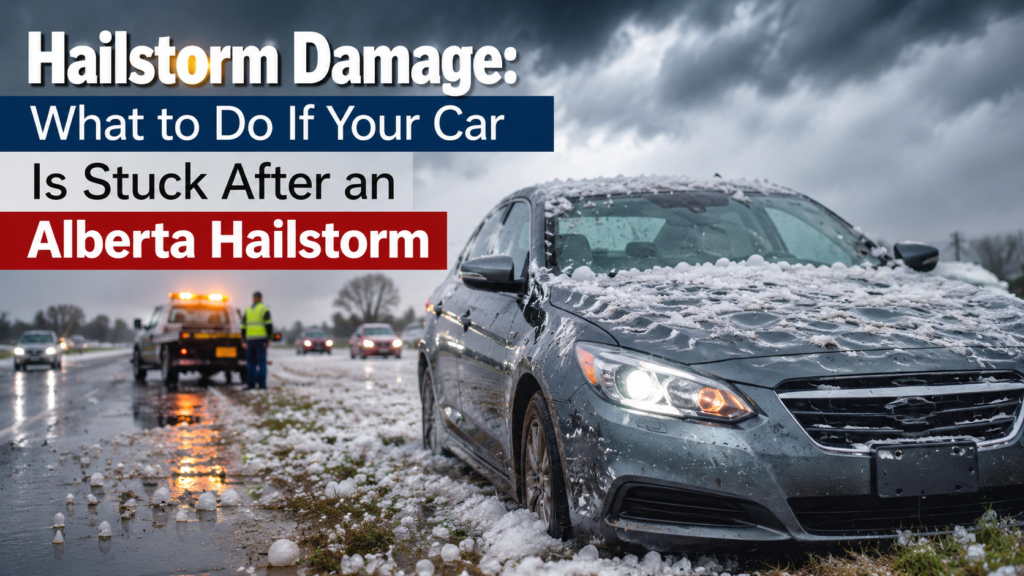
3. Call for a Flatbed Tow, Not a Hook-and-Chain
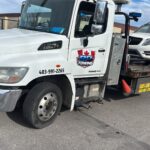
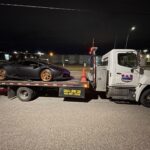
Storm-damaged vehicles especially ones with cracked glass or electrical issues should always be moved on a flatbed. This avoids further stress on the frame or suspension. If your vehicle has any luxury or specialty trim, this matters even more; see our guide on specialty vehicle towing for how proper equipment protects your car during a tow (special vehicle towing).
4. Document Everything for Insurance
Before the tow truck arrives, take photos of:
- Dents and cracked glass
- Your location and road conditions
- Any visible flooding, if applicable
Alberta insurers typically cover comprehensive hail damage, but photo evidence taken immediately speeds up your claim.
5. Don’t Try to “Just Get It Home”
A lot of drivers try to limp a hail-damaged car home rather than call for help. This is risky if your windshield is compromised or your car stalled in water a stalled engine that’s been flooded can suffer serious internal damage if restarted incorrectly.
What About Flooded Underpasses?
Calgary’s summer storms often bring flash flooding, particularly on low-lying roads and underpasses. If your car stalls in standing water:
- Do not restart the engine
- Turn on your hazard lights
- Call for a tow immediately a stalled vehicle in water needs proper recovery, not a jump start
When Hail Season Peaks in Alberta
Alberta’s hail season generally runs from late spring through early fall, with July and August seeing the highest frequency of severe storms across the Calgary: Airdrie: Okotoks corridor. Keeping a towing company’s number saved on your phone during these months is a smart habit for any Calgary driver.
How BP Towing Helps After a Storm
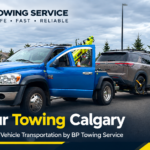
BP Towing Service runs 24/7 across Calgary and the surrounding 30-km radius, which means storm season doesn’t slow down response times. Whether your vehicle needs a flatbed tow after hail damage, a jump start because your battery drained while you waited out a storm, or simply a safe transport to your mechanic, our team is dispatched quickly with transparent, upfront pricing no “storm surcharge” surprises. If you also need emergency jump start help after your battery drained during a long wait, check out our jump start service.
FAQs
Q: Should I drive my car after a hailstorm if it still starts? A: Only if there’s no cracked glass, no warning lights, and no signs of water intrusion. If in doubt, call a tow truck rather than risk further damage.
Q: Does insurance cover towing after hail damage in Alberta? A: Most comprehensive auto insurance policies in Alberta cover hail damage, and many also cover towing costs if the vehicle is undrivable. Check your specific policy or ask your insurer directly.
Q: How fast can a tow truck reach me during a Calgary storm? A: BP Towing typically arrives within 20 to 35 minutes across Calgary neighbourhoods and major routes, even during active storm conditions.
Q: Can hail damage a car’s electrical systems? A: Yes, especially in newer vehicles with roof-mounted sensors, antennas, or cameras. If your dashboard shows unusual warnings after a storm, have it inspected before driving further.
Q: What’s the safest place to pull over during a hailstorm? A: An overpass, parkade, or covered gas station canopy never under trees, power lines, or on the open shoulder of a highway.
Need help after a storm? Contact BP Towing available 24/7 across Calgary.